{"ajaxurl":"https:\/\/models118.da.smarthost.pl\/wp-admin\/admin-ajax.php?lang=en","nonce":"541a430b38","homeUrl":"https:\/\/models118.da.smarthost.pl\/","shopUrl":"https:\/\/models118.da.smarthost.pl\/shop\/","cartUrl":"https:\/\/models118.da.smarthost.pl\/cart\/","checkoutUrl":"https:\/\/models118.da.smarthost.pl\/checkout\/","collectionLimit":12,"i18n":{"addedToCart":"Added to cart","addToWishlist":"Add to wishlist","addedToWishlist":"Added to wishlist","removeFromWishlist":"Remove from wishlist","removedFromWishlist":"Removed from wishlist","error":"Something went wrong","loading":"Loading...","outOfStock":"Out of stock","viewCart":"View cart","proceedToCheckout":"Proceed to Checkout","addedToCollection":"Added to Collection","reserved":"Reserved!","soldOut":"Sold Out","invalidEmail":"Please enter a valid email address","connectionError":"Connection error. Please try again.","pwaTitle":"Models118","pwaDesc":"Never miss a rare model","pwaInstall":"Install App","pwaDismiss":"Dismiss"},"stats":{"models":552,"brands":31,"makers":11,"collectors":10000}}
1:18 Scale Model Cars - Detail Meets Display Balance
More about our models
At roughly 10 inches in length, 1:18 scale represents the most popular collectible format. This scale delivers opening doors, hoods, and trunks revealing detailed interiors and engines, while maintaining practical display footprint. From premium AUTOart and Kyosho to accessible Bburago and Maisto, 1:18 serves collectors across all budget tiers.
144 models available in 1:18 scale — find your next collectible
How big is a 1:18 scale model car?
A 1:18 scale model car measures approximately 25-28 cm (approximately 10-11 inches). This means the model is exactly 1:18 the size of the real car — every detail proportionally reduced to create an accurate miniature replica.
What car brands are available in 1:18 scale?
Choose from 144 models in 1:18 scale, featuring Alpine, Aston Martin, Audi, Austin-Healey, Bentley, BMW, Chevrolet, Citroen and more. New releases added weekly from all major manufacturers.
What are the best 1:18 diecast cars?
Top 1:18 diecast picks: AUTOart for fully opening models, Minichamps for German precision, Norev and Solido for excellent value. Resin collectors rate GT Spirit and OttO Mobile highest. Wide range from budget-friendly to premium.
How should I display 1:18 scale models?
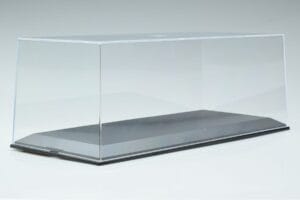
For 1:18 scale models, use a UV-protected glass display case to prevent paint fading. At least 35 cm depth and 15 cm height per shelf. A standard display case fits 8-12 models across 4 shelves. Keep away from direct sunlight and maintain stable room temperature.
Is 1:18 a good scale for beginners?
1:18 is the most popular collector scale and the best starting point. Models measure 25-28 cm with excellent detail visible to the naked eye. Wide range from budget-friendly Solido and Norev to premium AUTOart and CMC.
How to start a 1:18 scale collection?
Pick a theme — one car brand, one era, or one color scheme. Start with 3-5 models to see if 1:18 suits your space (each needs ~30 cm shelf width). Solido and Norev offer strong starter models. Join collector forums for tips on building your first display.
How are model cars shipped?
5-layer packing: original box, bubble wrap, foam inserts, reinforced carton, FRAGILE markings. All shipments tracked and insured. Damage rate under 0.1%.
Do you offer returns?
14-day returns on unused items in original packaging. Defective or damaged in transit? Free replacement — contact us with photos within 48 hours.
The 1:18 scale model cars category represents the sweet spot in collectible automotive replicas, where examination-grade detail meets practical display requirements. At approximately 10 inches for standard passenger vehicles, 1:18 scale diecast models provide sufficient size for meaningful opening features - doors that reveal accurately trimmed interiors, hoods that expose engine bay recreations faithful to factory specifications, trunk lids that showcase luggage compartment details - while maintaining footprints that allow multi-piece collections without requiring dedicated room conversions. This balance explains why 1:18 dominates the scale model market, supported by more manufacturers producing wider variety than any competing format, serving collectors from first-purchase novices through seasoned enthusiasts maintaining hundreds of pieces.The Scale Standard in Collectible Modeling
Understanding why 1:18 achieved universal adoption requires examining what this specific scale proportion enables. At 1:18 ratio, a standard sedan measuring 15-16 feet in reality becomes approximately 10-11 inches in replica form - large enough that dashboard instruments receive individual gauge faces with readable typography, door panels show distinct material textures differentiating leather from plastic trim, and wheel designs capture spoke patterns and brake caliper details visible from normal viewing distance. Opening features become mechanically satisfying rather than fragile compromises, with doors operating through realistic hinge points, hoods lifting to reveal engine components occupying proper spatial relationships, and trunk access showing spare tire wells and structural details. This detail capacity attracts serious collectors who want replicas rewarding close examination, while the 10-inch footprint prevents individual models from dominating entire shelves the way 1:12 scale would. Weight distribution matters at this size - quality 1:18 diecast models possess heft that communicates manufacturing substance, with door closing producing satisfying mechanical feedback and overall handling feel suggesting precision rather than toylike fragility. Paint finishes achieve depth and luster approximating actual automotive coatings, with metallic flake visible under examination and clearcoat layers providing realistic gloss characteristics. Panel gaps - the spacing between doors, hoods, and body panels - become measurable quality indicators at 1:18 scale, with premium manufacturers achieving sub-millimeter consistency while mass-market producers accept 1-2mm variations collectors learn to evaluate when assessing value propositions.Manufacturer Landscape Across Quality Tiers
The 1:18 scale supports the industry's broadest manufacturer participation, spanning entry-level accessibility through investment-grade craftsmanship. Mass-market producers Bburago and Maisto deliver 1:18 diecast models at $30-50 price points that introduce younger collectors and budget-conscious enthusiasts to the scale's appeal, with opening features demonstrating basic functionality and paint quality sufficient for casual display. These entry options serve collectors building quantity-focused collections where comprehensive coverage matters more than individual piece perfection. Mid-tier manufacturers Kyosho, Minichamps, and Norev occupy $80-150 territory, offering superior panel fit, authentic badging details, correct wheel designs matching factory specifications, and paint quality rewarding closer examination. Collectors at this tier expect accurate proportions, properly scaled opening features, interior appointments showing distinct material textures, and engine bays capturing essential powerplant character without hand-built detailing. Premium diecast from AUTOart represents the format's quality apex at $150-300, delivering panel gaps under 0.5mm, photo-etched details for grilles and emblems, fabric seatbelts with functional buckles, and opening mechanisms operating with precision suggesting jewelry rather than toys. AUTOart's signature Composite Model construction combines diecast chassis with composite body panels that permit tighter panel fits and more intricate surface details than traditional all-metal casting allows. Beyond diecast, resin specialists like BBR Models, Looksmart, and Make Up produce 1:18 sealed-body replicas at $300-600 that achieve surface detail and paint accuracy impossible with opening-feature construction, serving collectors prioritizing absolute authenticity over mechanical interaction. This manufacturer diversity allows collectors to build 1:18 collections matching budget realities - mixing mass-market breadth with mid-tier quality and premium showpieces - while maintaining scale consistency across display presentations.Scale Comparison and Collection Strategy
Positioning 1:18 within the broader scale landscape clarifies its collecting advantages and tradeoffs. Compared to 1:43 scale at roughly 4 inches, 1:18 offers dramatically superior detail examination and opening feature satisfaction, but requires approximately four times the linear display space and typically costs 2-3x more for equivalent subjects. Collectors moving from 1:43 to 1:18 discover that interior details transition from suggested to fully resolved - individual instrument graphics become readable, gear selector gate patterns show proper typeface, and seat stitching follows realistic patterns rather than simplified impressions. Door card details, center console switchgear, and headliner textures achieve recognition thresholds that make interiors destinations for examination rather than glimpses through windows. However, this detail capacity demands display space commitment - where 1:43 collectors arrange twenty models across standard bookshelf, 1:18 equivalents require dedicated display cases or multiple shelving units. Many collectors maintain both scales strategically, using 1:43 for comprehensive manufacturer lineup coverage and 1:18 for hero pieces representing favorite models or significant automotive milestones. Compared to 1:12 scale at approximately 15-16 inches, 1:18 sacrifices some detail resolution and physical presence but maintains practical multi-piece collecting where 1:12 forces curation over quantity. The 1:12 format delivers examination-grade details that reward magnification - gauge faces showing individual numbers, engine bay components capturing bolt head patterns, panel shutlines maintaining sub-0.5mm consistency - but individual models occupy space equivalent to three or four 1:18 examples and typically cost double or triple. Most collectors find 1:18 represents the practical maximum for building comprehensive collections spanning multiple manufacturers, eras, or themes, with 1:12 reserved for singular showpiece investments. Against 1:64 scale popularized by Hot Wheels and Matchbox, 1:18 serves entirely different collecting purpose - where pocket-scale models enable hundreds-piece collections documenting exhaustive automotive coverage, 1:18 invites examination and interaction that transforms collecting from accumulation into curation.Building Your 1:18 Scale Collection
Successful 1:18 collecting requires display planning, quality tier navigation, and thematic focus that matches space and budget realities. Display infrastructure matters significantly at this scale - individual models require 12-15 inches of linear shelf space accounting for door opening clearance and visual breathing room, meaning standard 36-inch shelf accommodates only 2-3 pieces comfortably. Dedicated display cases with adjustable shelving, integrated lighting, and dust protection become worthwhile investments for serious 1:18 collectors, with brands like IKEA Detolf, Moducase, and custom acrylic fabricators offering solutions ranging from $60 budget options through $500+ professional presentations. Lighting transforms 1:18 display from storage to showcase, with LED strip lighting revealing paint depth and panel details while minimizing heat that can damage decals or soften plastic components over years. Quality tier strategy separates successful collectors from frustrated accumulators - attempting to build comprehensive 1:18 collections using only premium manufacturers leads to budget exhaustion and limited variety, while committing exclusively to mass-market options produces quantity without pieces worthy of extended examination. Effective approach mixes tiers strategically: mass-market breadth for comprehensive manufacturer lineup coverage, mid-tier quality for everyday favorites representing personal automotive passion, premium showpieces for legendary vehicles justifying investment-grade treatment. Thematic focus provides collecting direction - some enthusiasts pursue single-manufacturer depth building complete Ferrari timeline coverage, Porsche 911 generational evolution, or Mercedes-AMG performance progression; others organize around motorsport themes collecting Le Mans winners, Formula 1 championship cars, or rally legends across decades; still others curate by era, assembling 1960s classics, 1990s supercars, or modern hybrid technology in coherent displays that tell automotive stories through carefully selected examples. The 1:18 format supports all these approaches while maintaining detail satisfaction that rewards the journey from first acquisition through hundred-piece milestone. Storage considerations matter for active collectors - individual models benefit from original packaging retention for protection during reorganization or potential future sale, with dedicated storage areas maintaining boxes in climate-controlled environments that prevent cardboard deterioration and styrofoam degradation. Condition maintenance involves regular dusting using microfiber cloths or soft brushes, avoiding harsh chemicals that damage paint or decals, and periodic inspection of opening features to ensure hinge mechanisms maintain proper operation. The 1:18 scale ultimately serves collectors seeking the optimal balance between detail satisfaction justifying close examination and practical display parameters allowing meaningful collection building - not too small to reveal craftsmanship, not too large to prevent variety, but precisely sized for the serious collector's sweet spot.