Last One

We'll notify you once when this item is available. No spam.
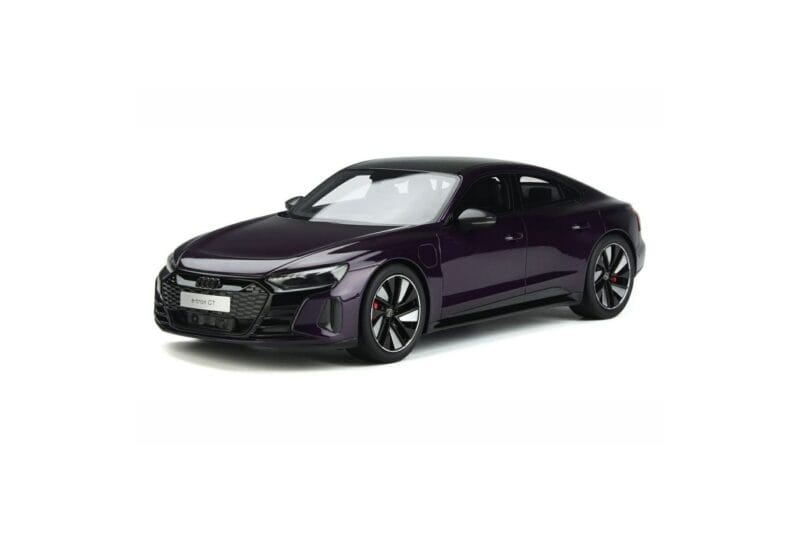
For collectors documenting how traditional performance brands adapt to electric powertrains, GT Spirit's 1:18 Audi RS e-tron GT captures Audi's first dedicated electric performance vehicle. This 2021 gran coupe delivers 637 horsepower through dual electric motors and quattro all-wheel-drive, demonstrating how Audi translates quattro philosophy from internal combustion to electric architecture. The Audi e-tron GT 1:18 model preserves this transitional moment when traditional performance manufacturers establish electric credibility while maintaining brand identity through design language and driving dynamics.
GT Spirit's decision to include the Audi RS e-tron GT in their 1:18 resin catalog reflects recognition that electric performance represents significant automotive cultural shift worth documenting through collectible replicas. Unlike heritage-focused manufacturers who primarily reproduce combustion-era vehicles, GT Spirit's modern performance emphasis includes electric and hybrid powertrains that define contemporary automotive development. The e-tron GT's sleek gran coupe proportions and four-door layout receive resin treatment that captures how Audi differentiates electric performance from Tesla's minimalist approach or Porsche's Taycan's more aggressive stance. At 1:18 scale, the RS e-tron GT's low roofline, wide track, and distinctive lighting signatures communicate electric performance through design language that maintains Audi's sophisticated aesthetic rather than adopting futuristic styling conventions. GT Spirit's resin construction at approximately 10 inches length provides sufficient detail to appreciate how Audi adapted the e-tron GT's bodywork to balance aerodynamic efficiency requirements—critical for electric range—with visual presence appropriate to 637-horsepower output. Collectors building modern Audi performance narratives find the e-tron GT essential to showing how quattro capability evolved beyond mechanical differentials to electric torque vectoring, positioning Audi alongside Porsche and BMW as traditional manufacturers establishing electric performance legitimacy.
The Audi e-tron GT shares its fundamental J1 electric platform with the Porsche Taycan, representing Volkswagen Group's strategy of developing dedicated electric architectures that multiple brands adapt to their specific character rather than converting existing combustion platforms. This platform commonality means the e-tron GT and Taycan share 800-volt electrical architecture enabling 270-kilowatt fast charging, similar battery pack layout, and dual-motor all-wheel-drive foundation—but Audi and Porsche tune suspension, steering, power delivery, and calibrate driving dynamics to maintain distinct brand identities. The RS e-tron GT's 637 horsepower actually comes from a peak output of 646 horsepower available temporarily through launch control, routing through rear and front motors that create electric quattro's instantaneous torque distribution without mechanical differentials or driveshafts. The 93.4-kilowatt-hour battery pack enables approximately 230 miles of EPA-rated range, demonstrating the performance-versus-efficiency compromise that defines electric gran turismos—the e-tron GT prioritizes acceleration and driving dynamics over maximum range, similar to how combustion performance cars accept lower fuel economy for power delivery. Audi's suspension tuning and adaptive air suspension calibration distinguish e-tron GT driving character from Taycan—generally characterized as more refined gran turismo versus Porsche's sharper sports car focus, though both deliver sub-3.5-second 0-60 acceleration that defines modern electric performance.
The e-tron GT's four-door gran coupe body style represents Audi's interpretation of how electric performance should appear—avoiding Tesla Model S's more conservative sedan proportions while maintaining more restrained aesthetics than Taycan's overtly aggressive stance. The low roofline maximizes aerodynamic efficiency critical to electric range, while wide fenders and pronounced shoulders communicate performance capability through visual mass and stance. Audi's design language for the e-tron GT emphasizes smooth surfaces and integrated details over the vents and scoops that characterize combustion performance cars requiring significant cooling airflow. The signature lighting—Audi's matrix LED headlights and distinctive LED taillights spanning the rear—creates immediately recognizable e-tron GT presence while demonstrating how electric architecture enables lighting design freed from combustion engine packaging constraints. This GT Spirit 1:18 resin replica captures how the e-tron GT represents Audi's electric design direction—sophisticated rather than futuristic, performance-oriented without aggression, maintaining brand continuity while embracing electric vehicle possibilities. The gran coupe format specifically targets buyers seeking four-door practicality with coupe elegance, competing against Mercedes-AMG EQS, BMW i4, and Porsche Taycan in the emerging premium electric performance segment.
Adding GT Spirit's Audi RS e-tron GT to collections documents Audi's electric transition while maintaining connection to quattro heritage that defines brand performance identity. The 1:18 scale allows collectors to pair the e-tron GT with combustion RS models—whether RS6 Avant wagons, RS7 Sportback fastbacks, or R8 supercars—illustrating how Audi adapts performance philosophy across powertrain architectures. The e-tron GT's relationship to Porsche Taycan through shared J1 platform also creates collecting opportunities around Volkswagen Group's electric performance strategy, potentially pairing e-tron GT with Taycan variants to show how different brand positioning shapes vehicles from common technical foundations. GT Spirit's resin construction provides detail appropriate to documenting the e-tron GT's design refinement while maintaining accessible pricing that positions electric performance models as attainable additions rather than ultra-premium investments requiring manufacturers like BBR or MR Collection treatment. For collectors building narratives around automotive electrification, the Audi e-tron GT represents traditional manufacturers establishing electric credibility—contrasting with Tesla's pure-electric startup approach or emerging Chinese manufacturers' rapid electric development. The e-tron GT specifically demonstrates how brands rooted in combustion heritage translate identity markers to electric formats: quattro becomes electric torque vectoring, V8 soundtracks yield to electric motor whine, and mechanical complexity gives way to software-defined performance calibration. Collecting the e-tron GT preserves this transitional moment when internal combustion expertise meets electric powertrain engineering, documenting how Audi maintains performance relevance while adapting to regulatory and market forces driving industry electrification.