New
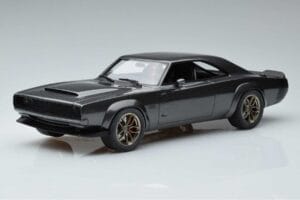
Dodge Super Charger SEMA Concept Gray GT Spirit 1:18
Price:
$778.00
Dodge replicas capture six decades of American performance, from 1960s Charger and Challenger muscle car legends through the raw Viper supercar to modern Hellcat monsters producing 700+ horsepower. Available from Greenlight and Auto World to AUTOart across 1:18, 1:43, and 1:64 scales for muscle car collectors.
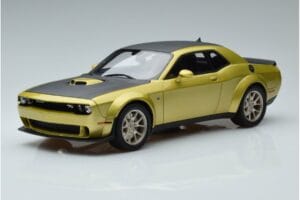
2 Dodge models in stock — diecast and resin from Norev, GT Spirit, Minichamps, and more
Our Dodge collection includes 2 diecast and resin scale models, all officially licensed with original packaging. Available scales: 1:18. New releases added weekly.
Dodge models are produced by GT Spirit, among others. Each manufacturer has different strengths — Norev for value, GT Spirit for resin exclusives, Minichamps for precision.
The best Dodge diecast models combine accurate detail with solid construction. Top picks: AUTOart for opening parts, Minichamps for precision, Norev for value. Resin collectors should look at GT Spirit and OttO Mobile for limited editions.
Limited edition and discontinued Dodge models often appreciate — especially resin runs under 1,000 pieces. Keep the original box and certificate. The most sought-after: rare color variants and motorsport editions.
You'll find 2 Dodge models in scales: 1:18. The 1:18 range offers the most detail and variety; 1:43 is ideal for building a larger collection in less space.
Keep Dodge models in UV-protected display cases away from direct sunlight — UV fades paint over time. Handle diecast by the base, never by mirrors or antennas. Dust monthly with a soft microfiber cloth. Store original boxes separately in a cool, dry place — packaging adds long-term collector value.
5-layer packing: original box, bubble wrap, foam inserts, reinforced carton, FRAGILE markings. All shipments tracked and insured. Damage rate under 0.1%.
14-day returns on unused items in original packaging. Defective or damaged in transit? Free replacement — contact us with photos within 48 hours.
Dodge diecast models preserve American muscle car heritage in its purest form, capturing six decades of unfiltered performance from the 426 Hemi-powered Chargers that defined 1960s muscle car warfare through the raw V10 Viper supercar to modern Hellcat and Demon variants producing over 800 horsepower from factory floors. Where Ferrari built racing pedigree and Porsche refined engineering precision, Dodge delivered cubic inches, straight-line dominance, and that visceral V8 rumble that defined American automotive passion across multiple generations of performance enthusiasts building collections around horsepower, attitude, and the muscle car culture that Dodge exemplified through changing regulations and shifting market priorities.
The 1960s and early 1970s established Dodge as muscle car royalty when the Charger, Challenger, and Super Bee nameplates created legends on both street and drag strip that define American performance collecting to this day. The 1968-1970 Charger R/T with its distinctive tunnel-back roofline and optional 426 Hemi engine became the visual icon of muscle car excess, capable of mid-13-second quarter-miles in street trim while delivering the presence that made it Hollywood's favorite outlaw vehicle in countless chase scenes. The Charger Daytona's wild aerodynamic package pursued NASCAR dominance at over 200 mph with its towering rear wing and nose cone extension, creating one of the most instantly recognizable silhouettes in automotive history and a permanent fixture in muscle car model collections.
The 1970-1974 Challenger answered Plymouth's Barracuda and competed directly against Chevrolet's Camaro and Ford's Mustang in the pony car segment that defined youth-market performance during the muscle car golden age. Dodge offered everything from economical Slant-Six variants to the 425-horsepower 426 Hemi in T/A and R/T configurations that commanded respect at every stoplight and drag strip across America.
The Super Bee brought working-class performance with no-frills attitude, stuffing big-block 383 and 440 Six Pack power into mid-size Coronet bodies for pure acceleration capability without luxury pretense or unnecessary weight. These models established Dodge's performance credibility through an era when horsepower was cheap, gasoline was cheaper, and emissions regulations had yet to strangle the big-block V8 engines that made quarter-mile dominance accessible to average buyers willing to check the right option boxes. The oil crisis and subsequent emissions regulations ended the original muscle car era by the mid-1970s, but Dodge's performance DNA never disappeared entirely, merely hibernating through decades of front-wheel-drive economy sedans and K-car derivatives until the right moment arrived for spectacular resurrection.
The 1992 Viper RT/10 roadster announced Dodge's return to extreme performance with an 8.0-liter V10 producing 400 horsepower wrapped in minimalist bodywork that prioritized driving experience over comfort refinements or safety nannies. With no traction control, no anti-lock brakes in early versions, and side-exit exhaust pipes hot enough to burn unwary passengers, the Viper represented automotive danger in an era of increasing safety regulation, creating a raw supercar that demanded driver skill and delivered visceral thrills Ferrari and Lamborghini couldn't match at twice the price. The nameplate evolved through five generations until 2017 production ended, with ACR variants setting production car lap records at circuits worldwide through massive aerodynamic downforce and chassis development that transformed the street car into a legitimate track weapon capable of humbling purpose-built race cars on technical road courses.
Modern muscle car resurrection began in 2008 when Dodge revived the Challenger nameplate with retro styling that referenced the 1970 original while delivering contemporary performance and daily usability. The 2015 Hellcat escalation supercharged both Challenger and Charger with 707 horsepower, then continued through increasingly absurd variants including the 840-horsepower Demon that achieved 9-second quarter-miles with street tires, the limited Demon 170 producing 1,025 horsepower, and various Redeye and Jailbreak configurations that cemented Dodge's position as the last manufacturer building traditional V8 muscle cars while competitors shifted toward turbocharged four-cylinders and hybrid powertrains. This modern Hellcat era created fresh collecting interest as new generations discovered muscle car appeal through contemporary performance that exceeded anything the original muscle car era could deliver.
Dodge model car production benefits from strong manufacturer attention across all quality tiers, reflecting muscle car culture's deep roots in American collecting traditions and the consistent commercial appeal of Charger, Challenger, and Viper subjects to mass-market and premium producers alike. Hot Wheels maintains the most extensive Dodge coverage through both mainline releases and premium sub-brands like Car Culture and Boulevard series, delivering 1:64 scale Chargers, Challengers, and Vipers in countless variations including period-correct muscle car liveries, modern Hellcat configurations, and fantasy customs that appeal to younger collectors building comprehensive Dodge displays at affordable price points. Premium Hot Wheels releases improve casting detail and tampo printing quality while maintaining the sub-ten-dollar pricing that makes muscle car collecting accessible without specialist budgets or investment-grade commitment.
Greenlight specializes in American automotive subject matter with particularly strong Mopar coverage in 1:64 and 1:18 scales, delivering Dodge replicas featuring realistic proportions, accurate wheel designs, and period-correct details that serve collectors prioritizing historical accuracy over opening features or premium materials. Their dedication to American car culture means comprehensive Dodge coverage spanning classic muscle car era variants through modern performance configurations with livery accuracy and specification detail that rewards research-oriented collectors. Maisto delivers 1:18 scale Dodge muscle cars with opening doors, hoods, and trunks at entry-level pricing, making large-format display accessible without premium manufacturer investment for collectors who value physical size and interactive features over paint quality and panel gap precision.
This mass-market foundation creates collecting pathways where newcomers can build substantial Dodge displays before graduating to mid-tier quality levels that reward closer examination and deliver superior accuracy for personally significant models.
Auto World positions itself as the American muscle car specialist in the mid-tier segment, producing limited-production 1:18 scale releases with superior tampo printing quality, historically researched color combinations, and the attention to Mopar-specific details that serious muscle car enthusiasts demand beyond mass-market approximations. Their limited edition strategy and focus on period-correct specifications creates secondary market appreciation for sought-after color combinations while maintaining reasonable initial pricing compared to premium European manufacturers. Johnny Lightning and M2 Machines serve similar collector demographics with strong Mopar coverage in 1:64 scale, offering premium castings with realistic proportions, opening features on selected releases, and licensed manufacturer authenticity that distinguishes their Dodge replicas from generic Hot Wheels alternatives through superior detail capture and collector-focused release strategies.
At the premium tier, AUTOart delivers definitive Dodge Viper replicas in 1:18 scale with opening features revealing detailed engine bay recreations including the massive V10 engine with accurate plumbing and wiring details, accurately trimmed interiors with proper gauge faces and control layouts, and the paint quality that justifies investment-level pricing for hero-piece collectors prioritizing specific landmark models over comprehensive coverage. Their Viper GTS Coupe captures the iconic blue-with-white-stripes color scheme that defined the nameplate's visual identity and remains the most collected Viper configuration across all manufacturers. Kyosho and Minichamps produce selected Dodge classics including original B-body Chargers and modern Challengers with sealed precision in 1:18 and 1:43 scales, focusing on historically significant configurations and special editions rather than attempting comprehensive lineup coverage, serving collectors who value surface finish quality and accurate proportions over opening features. Specialty producers like GMP and Acme operate at ultra-premium levels with limited-edition muscle car releases where accurate detail specification down to correct carburetor configurations and period-accurate interior trim creates investment-grade collectibles that appreciate beyond initial retail pricing, particularly for documented competition configurations and rare factory color combinations that commanded premium pricing when new.
Dodge model cars span 1:64, 1:43, and 1:18 scales with distinct advantages for different collecting approaches and display priorities within muscle car collecting culture. The 1:64 format from Hot Wheels, Greenlight, Johnny Lightning, and M2 Machines enables comprehensive coverage including obscure trim levels, limited production variants, and special editions that larger scales cannot economically support, allowing collectors to build complete Charger or Challenger evolution displays documenting every significant year and configuration from classic muscle car era through modern Hellcat variants within practical shelf space and reasonable budget constraints. This scale particularly suits collectors pursuing completist approaches where breadth matters more than individual model detail examination.
The compact footprint means dozens of models fit standard display cases while maintaining recognizable Dodge design language and distinctive muscle car proportions that make identification possible from across a room.
The 1:18 scale dominates serious Dodge collecting where individual models receive hero-piece treatment and opening features justify the larger format's space requirements and higher price points. At roughly 10 inches in length, 1:18 Dodge replicas deliver examination-worthy detail including accurate dashboard layouts, proper seat stitching patterns, and engine bay recreations that capture the visual drama of Hemi V8s or Viper V10 powerplants in ways smaller formats cannot resolve. Premium manufacturers like AUTOart and Auto World use this scale to showcase their highest detail work, with opening doors, hoods, and trunks revealing interiors and mechanical components that reward close examination. Collectors building curated Dodge displays often choose 1:18 for landmark models representing significant collecting milestones or personal automotive connections while using smaller scales for breadth coverage of supporting cast models that provide context without demanding showcase positioning.
The 1:43 scale serves collectors seeking middle ground between comprehensive coverage and detail examination, providing sufficient size for paint quality assessment and proportion accuracy while allowing multiple-model displays within manageable shelf configurations. European manufacturers like Minichamps use this scale for premium sealed models where surface finish quality and accurate shut lines justify pricing above mass-market alternatives, while American specialists produce opening-feature variants that maintain interactive appeal at more compact dimensions than 1:18 alternatives.
Dodge collecting naturally organizes around several thematic strategies reflecting how muscle car enthusiasts connect with American performance heritage and build displays that tell coherent stories rather than accumulating random acquisitions. Nameplate completism focuses on single model lines, building comprehensive Charger evolutions from 1966 debut through multiple body style generations to modern Hellcat variants, or tracking Challenger development from 1970 E-body original through its 1980s absence and 2008 resurrection to current supercharged configurations that deliver performance the original era could only dream about. These timeline displays document how a single nameplate adapted to changing decades, shifting regulations, and evolving performance expectations while maintaining core identity elements that connect modern interpretations to their classic ancestors.
Era-focused collections concentrate on specific performance periods that defined Dodge's reputation, particularly the 1968-1971 muscle car golden age when Hemi power and aerodynamic homologation specials competed on NASCAR superspeedways while street versions terrorized drag strips across America. Collectors pursuing this approach might focus exclusively on B-body Chargers and E-body Challengers in their prime years, building displays that capture the brief window when American manufacturers engaged in unrestricted horsepower warfare before emissions regulations and insurance company pressure ended the party. Alternatively, modern Hellcat era collecting from 2015 forward documents Dodge's decision to continue building traditional muscle cars with escalating supercharged performance while competitors abandoned V8 rear-wheel-drive platforms for smaller turbocharged engines and hybrid powertrains.
Horsepower evolution themes track Dodge's escalating performance ambitions across generations, documenting the journey from 426 Hemi's 425 factory-rated horsepower through Viper RT/10's 400 horsepower to Demon 170's 1,025 supercharged horsepower that redefined street-legal performance parameters and proved internal combustion engines could still deliver shocking acceleration numbers in an increasingly electrified automotive landscape.
Competition-focused collections pursue documented racing configurations including NASCAR Charger Daytonas and Superbirds with their extreme aerodynamic packages, SCCA Trans-Am Challengers that fought Camaros and Mustangs on road courses, and Viper GTS-R GT2 machines that won their class at Le Mans 24 Hours and demonstrated Dodge could build legitimate sports cars beyond straight-line muscle. Color-focused approaches leverage Dodge's famous High-Impact paint palette from the muscle car era, building collections around Plum Crazy Purple, Go Mango Orange, Sublime Green, and other vivid hues that defined 1970s automotive color expression and continue influencing modern Challenger special editions marketed to enthusiasts who appreciate historical connections. The diverse manufacturer landscape serving Dodge collectors means these thematic approaches remain achievable across budget levels, with mass-market options from Hot Wheels and Greenlight providing coverage breadth while premium manufacturers like AUTOart and Auto World deliver hero-piece quality for personally significant configurations that anchor collection displays and reward detailed examination under proper lighting conditions that reveal paint depth and surface finish quality impossible to capture through photography alone.