New
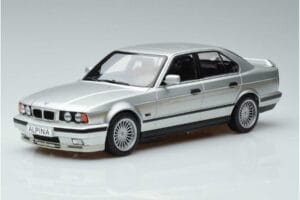
BMW Alpina B10 4.6 E34 Silver MCG 1:18
Price:
$313.00
Tuner car models capture the machines that defined aftermarket performance culture from the late 1980s through the early 2000s golden era. From Nissan Skyline GT-R dominance through Toyota Supra turbo legends to Honda's VTEC revolution, these replicas preserve JDM icons and European hot hatches across 1:18 and 1:43 scales from AutoArt, Ignition Model, and Tarmac Works.
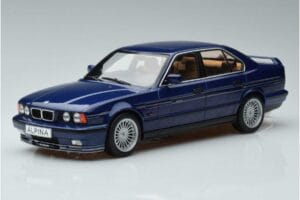
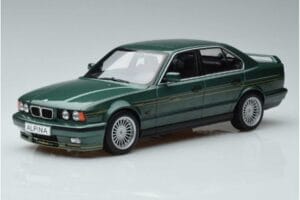
Browse 3 Tuner Icons scale models — diecast and resin from leading manufacturers
Our Tuner Icons collection features 3 diecast and resin scale models across all major scales and price ranges. Featured brands: BMW. New arrivals added regularly.
Tuner Icons models are produced by MCG, among others. Each manufacturer brings different strengths — from budget-friendly diecast to hand-finished resin limited editions.
Tuner Icons models are available in 1:18. The 1:18 scale (25-28 cm) offers the most detail; 1:43 is compact and ideal for larger collections.
Tuner Icons models are among the most sought-after in the hobby. Limited resin editions (under 3,000 pieces) appreciate after selling out. Key factors: production run size, manufacturer reputation, and the car's status among enthusiasts.
For Tuner Icons models, choose your scale first — 1:18 for display impact, 1:43 for variety. Then compare materials: diecast for hands-on handling, resin for sharper detail. Solido and Norev for value, AUTOart for premium with opening parts.
Tuner Icons diecast models make memorable gifts for car enthusiasts. Choose 1:18 scale for maximum visual impact on the shelf. Look for models with opening parts for interactive display. Norev and Solido offer gift-ready quality in branded manufacturer packaging.
5-layer packing: original box, bubble wrap, foam inserts, reinforced carton, FRAGILE markings. All shipments tracked and insured. Damage rate under 0.1%.
14-day returns on unused items in original packaging. Defective or damaged in transit? Free replacement — contact us with photos within 48 hours.
Tuner car models preserve the legendary machines that established aftermarket performance culture as a global phenomenon, capturing the Japanese Domestic Market icons and European hot hatches that proved factory engineering could be enhanced dramatically through turbocharger upgrades, suspension modification, and drivetrain optimization. These replicas document the golden era when Nissan Skyline GT-Rs dominated Japanese touring car racing while building street credibility through tuner shop builds exceeding 600 horsepower, when Toyota Supras combined bulletproof 2JZ inline-six architecture with sequential turbo technology that made four-digit horsepower accessible to dedicated enthusiasts, and when Mazda RX-7s demonstrated rotary engine potential through lightweight chassis dynamics that rewarded driver skill on mountain passes and road courses worldwide.
Japanese tuner icons emerged from a unique confluence of advanced factory engineering, lenient modification regulations, and competitive tuning shop culture that pushed performance boundaries throughout the 1990s. The Nissan Skyline GT-R lineage from R32 through R33 to the ultimate R34 generation combined advanced all-wheel-drive systems with RB26DETT inline-six twin-turbo engines that responded predictably to boost increases, creating the foundation for legendary tuner builds from MINE's, TOP SECRET, and HKS that regularly exceeded 500 horsepower while maintaining street drivability. The Toyota Supra A80 with its 2JZ-GTE engine became the ultimate tuner platform when enthusiasts discovered this overbuilt powertrain could reliably handle double its factory output with basic modifications, spawning a collector category where Supra replicas command premium pricing reflecting the real car's six-figure market values.
Mazda's RX-7 FD3S represented a different tuning philosophy, where rotary engine compactness enabled near-perfect weight distribution and handling dynamics that made these cars track weapons in skilled hands, while sequential twin-turbo complexity created tuning challenges that separated dedicated enthusiasts from casual modifiers. Honda's contribution came through high-revving VTEC naturally aspirated engines in the NSX supercar, Integra Type R, and multiple Civic Type R variants that proved forced induction wasn't the only path to performance, establishing a collecting category for precision-engineered factory hot versions that needed minimal modification beyond suspension and brake upgrades.
European tuner icons followed parallel evolution through different engineering philosophies. The Volkswagen Golf GTI established the hot hatch template in 1976 and refined it through multiple generations where each Mk iteration brought improved power-to-weight ratios and chassis dynamics, creating a lineage that tuning enthusiasts could trace from Mk1 through current production. Porsche's 911 Turbo models from 930 through 996 generation provided German tuning shops with rear-engine platforms that responded dramatically to boost increases and suspension geometry changes, while BMW's M3 evolution from E30 through E46 demonstrated how naturally aspirated inline-six engines could deliver racing-derived performance in daily-drivable packages. These European icons built different tuner cultures emphasizing Autobahn capability and Nürburgring lap times rather than quarter-mile acceleration, but shared the core philosophy that factory performance was merely a starting point for dedicated enthusiasts.
Tuner car model production spans specialized manufacturers who understand the difference between factory stock replicas and the modified specifications that make these machines collectible to enthusiasts. AutoArt delivers premium opening-feature replicas in 1:18 scale with particular strength in Nissan Skyline GT-R variants across all generations, Honda NSX in multiple configurations, and Toyota Supra A80 in both naturally aspirated and twin-turbo specifications with engine bay details that capture the 2JZ architecture accurately. Their diecast construction with photo-etched details and separately applied badges creates examination-worthy replicas at price points typically between $150-250 that serve collectors prioritizing accurate proportions and opening features over absolute precision.
Ignition Model operates at the premium resin tier where sealed construction eliminates panel gaps and enables paint finishes approaching real automotive quality, focusing almost exclusively on Japanese performance cars in factory-fresh condition and select tuner shop builds. Their collaboration with Japanese tuning legends like MINE's and TOP SECRET produces limited-edition replicas of specific builds that commanded attention at Tokyo Auto Salon, typically in runs of 300-500 pieces worldwide at $300-400 price points reflecting hand-built construction quality.
Tarmac Works specializes in accessible 1:64 and select 1:18 scale JDM performance replicas with particular strength in Honda and Nissan applications, offering Civic Type R variants and Skyline GT-R generations at mid-tier pricing that enables comprehensive lineup collecting where AutoArt's higher price points might limit collection breadth. Kyosho delivers solid mid-tier quality across both Japanese and European tuner icons in 1:18 and 1:43 scales, while Minichamps covers select German tuner highlights including BMW M3 evolution and Porsche 911 Turbo variants with their characteristic sealed precision. Mini GT has emerged as the dominant force in 1:64 tuner collecting, systematically documenting current tuner builds and JDM classics at $12-20 price points that make comprehensive collection building financially accessible, serving enthusiasts who prioritize variety over individual model detail. This manufacturer diversity allows tuner icon collectors to build comprehensive representations spanning multiple scales and budget tiers, mixing premium centerpiece models from AutoArt and Ignition Model with broader coverage from Tarmac Works and Mini GT depending on display goals and acquisition budgets.
Tuner icon collecting naturally organizes around several thematic approaches that reflect how enthusiasts connect with modified car culture. JDM-focused collections concentrate on the Japanese performance machines that dominated import racing and street tuning scenes throughout the 1990s and early 2000s, building complete representations of the Big Three turbo platforms through Skyline GT-R, Supra, and RX-7 in multiple specifications while adding supporting cast members like NSX, Integra Type R, and various Civic Type R generations that filled different performance niches. This approach works particularly well at 1:64 scale where Mini GT's systematic JDM coverage enables complete timeline documentation showing how each model evolved across generations, supplemented with 1:18 hero pieces from AutoArt for personally significant variants.
Era-focused strategies capture specific time periods when tuner culture reached peak visibility, such as late-1990s collections documenting the initial Fast and Furious impact when modified import cars achieved mainstream recognition, or early-2000s collections showing the JDM tuner scene at maximum technical sophistication before emissions regulations and economic pressures began constraining modifications. These collections mix Japanese and European icons that coexisted in the tuning world during those years, creating displays that transport viewers back to specific cultural moments.
Marque-specialist approaches follow single manufacturer lineages through tuner evolution, such as comprehensive Nissan GT-R collections spanning Hakosuka through R35 or Honda Type R collections documenting VTEC performance across Integra, Civic, Accord, and NSX applications. Platform-focused collecting concentrates on single model lines showing how aftermarket culture evolved that specific chassis, building complete Skyline GT-R representations from R32 through R34 in multiple colors and specifications, or comprehensive Supra collections spanning naturally aspirated through twin-turbo variants in the color combinations that became iconic through media exposure. Scale choice significantly influences collection scope in tuner categories where 1:64 enables systematic documentation of complete model lineages and tuner shop variants at practical display densities and acquisition costs, while 1:18 suits curated selections where engine bay accuracy and opening features justify premium investment for individually significant machines that defined tuner culture evolution.