New
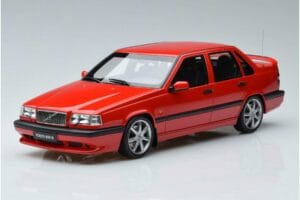
Volvo 850 R Sedan Otto 1:18
Price:
$472.00
Volvo replicas capture Swedish automotive engineering focused on safety innovation and understated design elegance spanning seven decades of production. From the iconic 240 estate through touring car championship winners to modern Polestar performance variants, Volvo model cars serve collectors appreciating pragmatic Nordic design philosophy and competition success in 1:18 and 1:43 scales from Minichamps, IXO, and specialist producers.
1 Volvo models in stock — diecast and resin from Norev, GT Spirit, Minichamps, and more
Our Volvo collection includes 1 diecast and resin scale models, all officially licensed with original packaging. Available scales: 1:18. New releases added weekly.
Volvo models are produced by Otto, among others. Each manufacturer has different strengths — Norev for value, GT Spirit for resin exclusives, Minichamps for precision.
The best Volvo diecast models combine accurate detail with solid construction. Top picks: AUTOart for opening parts, Minichamps for precision, Norev for value. Resin collectors should look at GT Spirit and OttO Mobile for limited editions.
Limited edition and discontinued Volvo models often appreciate — especially resin runs under 1,000 pieces. Keep the original box and certificate. The most sought-after: rare color variants and motorsport editions.
You'll find 1 Volvo models in scales: 1:18. The 1:18 range offers the most detail and variety; 1:43 is ideal for building a larger collection in less space.
Keep Volvo models in UV-protected display cases away from direct sunlight — UV fades paint over time. Handle diecast by the base, never by mirrors or antennas. Dust monthly with a soft microfiber cloth. Store original boxes separately in a cool, dry place — packaging adds long-term collector value.
5-layer packing: original box, bubble wrap, foam inserts, reinforced carton, FRAGILE markings. All shipments tracked and insured. Damage rate under 0.1%.
14-day returns on unused items in original packaging. Defective or damaged in transit? Free replacement — contact us with photos within 48 hours.
Volvo diecast models represent Swedish automotive engineering philosophy that prioritized occupant safety, practical design, and lasting build quality over flashy styling trends, creating vehicles that earned legendary durability reputations and devoted followings across international markets. From the brand's founding in 1927 through the iconic estate cars of the 1970s-1990s that defined Volvo identity, successful touring car competition programs that demonstrated performance capabilities, and modern performance-luxury production under Chinese ownership and Polestar engineering, Volvo model cars document a marque whose understated character and safety innovation leadership influenced global automotive development while maintaining distinct Nordic design sensibilities that set Volvo apart from German precision competitors and Italian passion brands.
Volvo built its global reputation through pioneering safety innovations that became industry standards, from the three-point safety belt introduced in 1959 and shared freely with competitors to side-impact protection systems, whiplash protection seating, and advanced crumple zone engineering that saved countless lives across six decades of continuous development. This safety-first philosophy shaped Volvo's design language toward substantial build construction, upright greenhouse visibility, and conservative styling that aged gracefully rather than chasing fashionable trends requiring frequent redesign.
The 240 series produced from 1974 to 1993 exemplifies Volvo's pragmatic approach: boxy styling that maximized interior space and visibility, overbuilt construction providing exceptional longevity, and rear-wheel-drive mechanicals simple enough for owner maintenance yet robust enough for hundreds of thousands of miles service life. The 240 became an automotive icon not through exotic performance or revolutionary styling but through dependable transportation that earned family trust across generations, with estate variants becoming particularly associated with academic professionals, outdoor enthusiasts, and practical-minded buyers valuing cargo capacity and durability over status signaling.
Volvo's estate car focus distinguished the brand from competitors who treated long-roof variants as afterthoughts to sedan priorities. The 740 and 940 series continued the 240's practical philosophy with improved aerodynamics and more modern amenities, while the 850 introduced front-wheel drive and five-cylinder engines representing Volvo's most significant mechanical evolution. The V70 carried estate excellence into the 21st century, and modern V60 and V90 models maintain Volvo's long-roof commitment even as global markets shifted toward SUV preferences. This consistent estate production across five decades makes Volvo particularly appealing to collectors focused on practical vehicle design rather than exotic performance, with scale model coverage reflecting both the 240's iconic status and competition success documented below.
Volvo's motorsport participation demonstrated that safety-focused engineering could deliver competitive performance, with touring car success providing the brand's most visible racing achievements. The 240 Turbo achieved significant Group A rally success during the 1980s, though lacking the outright power of Group B competitors, with drivers valuing the car's robust construction on demanding stages. The real breakthrough came with the 850 Estate's British Touring Car Championship campaign in 1994, where racing an actual station wagon rather than the conventional sedan body shocked traditionalists but proved Volvo's performance capabilities and generated enormous publicity for the brand's practical-vehicle-performance philosophy.
The 850 saloon continued BTCC success through the mid-1990s, winning races and finishing runner-up in the 1995 championship while fighting against lighter rear-wheel-drive competitors. Volvo's touring car program demonstrated front-wheel-drive could compete at the highest levels when engineered properly, with the brand's motorsport involvement lending performance credibility that expanded Volvo's appeal beyond safety-conscious family buyers.
The S60 represented Volvo's most committed touring car effort during the 2000s World Touring Car Championship era, with factory backing and professional teams delivering multiple race victories across global circuits. The Polestar performance division emerged from Volvo's touring car programs, initially as an independent racing team before becoming Volvo's official performance brand and eventually spinning off as a standalone electric performance marque under Geely ownership. This motorsport heritage provides scale model subjects beyond Volvo's road car focus, with racing liveries and touring car specifications offering collectors dynamic alternatives to estate car practicality.
Volvo diecast model production concentrates among European manufacturers with particular strength in road car coverage, though racing variants receive attention from motorsport specialists. Minichamps delivers the most comprehensive Volvo catalog spanning classic 240 and 140 series through modern S60 and V60 production, available in both 1:43 sealed precision and 1:18 opening-feature formats that serve different collector priorities. Minichamps' systematic approach to German and Swedish automotive production means Volvo coverage includes significant models across multiple decades rather than isolated highlights, enabling collectors to build representative Volvo timelines within single-manufacturer quality consistency.
IXO and its various sub-brands provide more affordable Volvo access, particularly for classic 1960s-1980s production including Amazon, 140, and 240 series models at price points enabling comprehensive collection building without premium investments. Norev covers selected modern Volvo production with particular attention to contemporary V60 and XC60 models reflecting current showroom availability.
Touring car models receive focused attention from motorsport specialists: Minichamps again leads with systematic BTCC and WTCC coverage documenting Volvo's competition eras, while IXO's Altaya partnership delivered affordable touring car releases through subscription series in European markets. The famous 850 Estate BTCC racer appears across multiple manufacturers and scales, reflecting the car's iconic status as perhaps the most recognizable racing estate car in motorsport history.
Scale choice for Volvo collecting often defaults to 1:43 as the natural format for comprehensive marque coverage, where dozens of models fit practical display configurations while maintaining recognizable Volvo proportions and design details. The 1:18 format suits collectors prioritizing hero pieces like the 850 Estate racer, P1800 sports coupe, or particularly pristine 240 examples where larger scale justifies premium investment for personally significant models. Volvo's understated design language translates effectively to smaller scales since the brand never relied on complex surface detailing or exotic proportions requiring large format examination, making 1:43 particularly effective for Volvo subjects compared to Italian exotics demanding 1:18 scale to capture design nuances.
Collecting strategies for Volvo models naturally organize around several thematic approaches reflecting the brand's distinct character. Estate car chronology from 140 through modern V90 documents Volvo's long-roof commitment across five decades, creating coherent displays celebrating practical vehicle design evolution. Touring car collections focused on BTCC and WTCC eras demonstrate Volvo's performance credentials through racing liveries and competition specifications. Complete model range approaches covering sedan, estate, and coupe variants within specific series like the 240 or 850 families show Volvo's body style diversity within individual platforms. Color choice matters particularly for Volvo collections since certain shades like dark blue metallic and burgundy red became strongly associated with the brand during specific eras, while the 240's extensive production run means examples appear in nearly every conventional automotive color offered during its nineteen-year production span.