{"ajaxurl":"https:\/\/models118.da.smarthost.pl\/wp-admin\/admin-ajax.php","nonce":"40459cb95a","homeUrl":"https:\/\/models118.da.smarthost.pl\/","shopUrl":"https:\/\/models118.da.smarthost.pl\/shop\/","collectionLimit":12,"i18n":{"addedToCart":"Added to cart","addedToWishlist":"Added to wishlist","removedFromWishlist":"Removed from wishlist","error":"Something went wrong","loading":"Loading...","outOfStock":"Out of stock","viewCart":"View cart","addedToCollection":"Added to Collection","reserved":"Reserved!","invalidEmail":"Please enter a valid email address","connectionError":"Connection error. Please try again."},"stats":{"models":552,"brands":31,"makers":11,"collectors":10000}}
1980s Model Cars - Turbo Era Icons & Radwood Legends
More about our models
From Ferrari F40 poster cars to Audi Quattro rally bruisers and Fox-body Mustangs, our 1980s model cars capture the decade's mix of turbo tech, wedge styling, and loud liveries. Explore diecast and resin replicas in 1:18, 1:43, and 1:64 scale—perfect for building a Radwood-era display or filling key gaps in a timeline collection.
1980s Model Cars — Collector Replicas from the Era
28 models from the 1980s — diecast and resin replicas of the era's most collected cars
What 1980s model cars do you offer?
Our 1980s collection includes 28 scale replicas in diecast and resin — road cars, racing legends, and limited editions from the period. Featured marques: Aston Martin, Audi, Chevrolet, Ferrari, Ford, Jaguar.
Which car brands define the 1980s?
The 1980s produced cars from Aston Martin, Audi, Chevrolet, Ferrari, Ford, Jaguar, Lancia, Mazda — many now discontinued in model form and sought after by collectors. Browse by brand to find specific models from the period.
What are the most collectible 1980s car models?
The most sought-after 1980s replicas are limited-edition recreations of legendary road and race cars. Discontinued models in low production runs (under 1,000 pieces) appreciate fastest. Original packaging and certificates add value.
Which manufacturers produce 1980s model cars?
1980s car replicas are produced by GT Spirit, MCG, Norev, Otto. Diecast brands focus on accurate road cars; resin specialists recreate rare and limited variants unavailable elsewhere.
What scales are available for 1980s models?
1980s models are available in 1:18. The 1:18 scale captures period-correct details best — chrome trim, dashboard gauges, and engine bays authentic to the era.
Why do collectors love 1980s car models?
The 1980s produced some of the most iconic cars in automotive history — and model manufacturers capture that legacy in precise detail. Limited editions of legendary road and race cars from the period are highly sought after. Period-correct details make these models time capsules of automotive design.
How are model cars shipped?
5-layer packing: original box, bubble wrap, foam inserts, reinforced carton, FRAGILE markings. All shipments tracked and insured. Damage rate under 0.1%.
Do you offer returns?
14-day returns on unused items in original packaging. Defective or damaged in transit? Free replacement — contact us with photos within 48 hours.
1980s model cars hit a sweet spot for collectors: they're modern enough to look crisp and aggressive, yet still rooted in analog driving feel. It was the decade of boost gauges and box flares, when turbocharging escaped the niche and all-wheel drive became a performance weapon. In replica form you can go from a Ferrari F40 with its vented clamshell and tall wing to a C4 Corvette with clean aero lines, a Fox-body Mustang 5.0, or a rally car wearing light pods and mud flaps. The era is also fun to shop because it spans every approach to model making, from affordable diecast you can handle often to limited resin pieces that chase perfect proportions. Use this page as a browsing hub to compare brands, scales, and materials and build a lineup that feels unmistakably 1980s.1980s Model Cars and the Turbo-Tech Aesthetic
The 1980s started with sharp edges and ended with wind-tunnel smoothing, so collecting within the decade can be as specific as you want. Early cars still carried 1970s cues—thin pillars, upright glass, simple bumpers—while the late '80s leaned into integrated aero, flush lighting, and color-matched ground effects. Under the skin, electronic fuel injection replaced carburetors, turbocharged engines became street-legal status symbols, and all-wheel drive systems like Audi's Quattro changed the definition of traction. Those shifts show up in the models through details collectors notice: intercooler intakes, NACA ducts, blistered fenders, and wheels that look period-correct rather than modernized.
When you're comparing 80s diecast cars, the decade's styling makes accuracy easy to spot. Ride height and wheel offset matter on everything with factory flares, from the BMW E30 M3 to widebody exotics, and a model can look 'off' if the stance is too tall or the tires are too narrow. Paintwork is another tell: many real cars wore metallic reds, two-tone grays, or bright factory stripes, so look for clean masking and crisp tampo printing around moldings and badges. Opening-feature diecast versions let you enjoy period interiors—sport seats, three-spoke steering wheels, and the occasional digital dash—while sealed resin editions often win on body shape and panel tightness.
The decade also rewards themed collecting because the visual cues are so strong. Some collectors build an 'office poster wall' shelf with the F40, Countach, 959, and other dream cars that defined car-magazine childhoods. Others lean into the Radwood vibe: everyday coupes, hot hatches, and boxy sedans that look perfect next to period accessories like pit boards, neon signage, or a miniature cassette boombox. Mixing street and race within the same brand is especially satisfying in the 1980s, since so many road cars were shaped by homologation rules and racing technology. However you curate it, the '80s lineup tends to look cohesive because the design language is bold and instantly recognizable.Street Icons, Supercars, and Homologation Specials
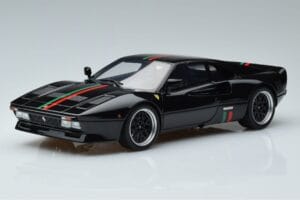
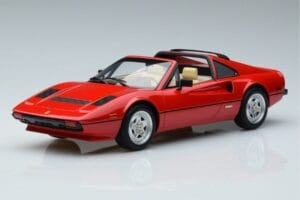
If you want pure drama, the 1980s supercar shelf basically builds itself. Ferrari's 288 GTO and F40, Lamborghini's Countach in its later widebody forms, and Porsche's technology showcase 959 all wear their engineering on the outside: vents, ducts, louvers, and wings that translate beautifully into scale. Even the more 'civilized' exotics of the era, like a Testarossa with its side strakes or a Lotus Esprit with sharp crease lines, have silhouettes you can recognize across a room. In 1:18 scale, these cars are especially rewarding because the clamshells, engine covers, and interior textures are big enough to appreciate without a magnifier, making them natural centerpiece models for an '80s display.
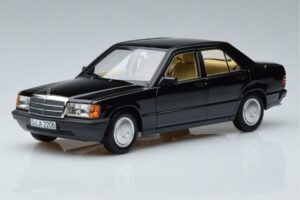
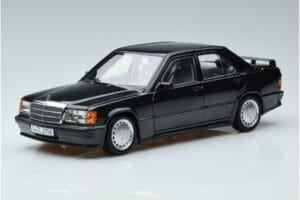
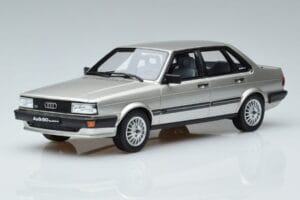
The real collector depth comes from the cars that sat between supercars and commuters, because the 1980s was packed with homologation specials and factory hot rods. Think BMW's E30 M3 and Mercedes-Benz 190E 2.3-16/2.5-16 Evolution cars, Audi's Quattro family, and the Lancia Delta Integrale that turned rally know-how into a street legend. On the American side, this is the era of the Fox-body Mustang 5.0, the IROC-Z Camaro, the C4 Corvette, and the Buick Grand National and GNX that made turbocharged V6 power feel rebellious. These subjects are perfect for building a 'realistic garage' shelf where every model looks like something you could have seen in a driveway, a dealership, or a high school parking lot in 1987.
Japanese performance also deserves a dedicated corner of any 1980s collection, because this is when lightweight handling and turbo power started to go global. Models like the Toyota AE86 Corolla, first-generation MR2, Mazda RX-7 FC, Nissan 300ZX Z31, and the A70 Supra capture the era's mix of sharp lines and emerging aero. Late-decade cars such as the R32 Skyline hint at the 1990s wave that followed, which makes them great bridge pieces if your collection spans multiple eras. For display, JDM '80s models look fantastic grouped by body style—coupe, hatchback, or targa—or by color palettes that scream the period: white with contrasting trim, bright reds, or graphic two-tone paint. They also pair naturally with 1:64-scale scenes if you like building a parking-lot meet or street-racing diorama.Motorsport Liveries: Rally, Endurance, and Oval Racing
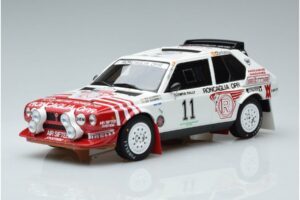
For many collectors, Group B rally model cars are the heart of the 1980s because nothing else from the decade looks or sounds as wild. The Audi Quattro S1, Lancia Delta S4, Peugeot 205 T16, Ford RS200, and MG Metro 6R4 were built around short-lived rules that encouraged extreme power and exotic engineering, and the scale replicas capture that attitude through giant wings, roof scoops, and aggressive stance. When you're choosing rally pieces, pay attention to the practical details that make them feel authentic: auxiliary light pods, gravel tires, mud flaps, roll cages, and correct co-driver equipment inside. Rally liveries also reward careful printing, since sponsor blocks and stripes often run across body seams where sloppy alignment is easy to notice.
Endurance racing in the 1980s delivered some of the most striking shapes ever put on a track, and it's a sweet spot for collectors who love aero and liveries. Group C and IMSA GTP prototypes such as the Porsche 956/962, Sauber-Mercedes C9, Jaguar XJR-9, Nissan GTP ZX-Turbo, and Toyota's late-'80s entries combine long tail sections, deep diffusers, and wide canopies that look especially good in profile. Many of these subjects are common in 1:43 scale because it lets you build a whole grid without sacrificing an entire shelf, while premium 1:18 versions make a single car feel like a museum object. Look for crisp sponsor printing, clean separation between matte and gloss finishes, and correct wheel and tire sizing, since tiny proportional errors stand out on low, flat-bodied prototypes.
Open-wheel and touring car racing add even more flavor to an '80s shelf. Formula 1's turbo era produced engineering legends like the McLaren MP4/4 and late-decade cars that introduced semi-automatic gearboxes, while touring series such as DTM turned box-fender sedans into door-to-door icons. For American collectors, the decade's NASCAR and oval racing machines hit a different nostalgia note: Monte Carlos, Thunderbirds, and Regals in bold sponsor colors that look right at home next to street muscle from the same years. Race replicas live or die on livery accuracy, so it's worth comparing the clarity of small contingency decals, the color of wheel centers, and the way the model maker handles window netting, roll cages, and front splitters. A few well-chosen race cars can make a street collection feel like a complete era story.Scales, Materials, and Makers: Choosing the Right Replica
Scale choice is where most 1980s collections really take shape. In 1:18, a typical coupe or supercar has the presence to show off the era's aero tricks—rear wings, side strakes, fender vents—and opening doors and engine covers can turn a single model into a mini display piece. 1:43 is the workhorse for era collecting because it lets you keep breadth: you can line up multiple generations of the 911 Turbo, compare American pony cars to European homologation specials, or build a full Group C grid without running out of room. And if you like dioramas, 1:64 is hard to beat for '80s street scenes, parking-lot meets, and 'garage' displays, especially when you mix in period trucks, trailers, and accessories.
The maker and material matter just as much as scale, because different companies chase different collector priorities. Premium diecast lines from AUTOart or Kyosho tend to focus on sharp detailing and functional openings, while brands like Minichamps and Norev often shine in accurate proportions across a wide subject range. For motorsport, specialists such as Spark are known for getting the stance, wheel details, and livery layout right, which is crucial on 1980s race cars covered in graphics. Resin-focused producers like GT Spirit and OttOmobile often deliver sealed-body models with excellent shapes and aggressive widebody subjects, and boutique high-end names like Amalgam, Tecnomodel, or GP Replicas cater to collectors who want limited-run display pieces. At the affordable end, Bburago, Maisto, Hot Wheels, Greenlight, and Johnny Lightning keep the era approachable, which is perfect for building volume or starting a new theme.
As you browse, it helps to treat 1980s replicas like you would the real cars: the small stuff is where the personality lives. Check that wheels match the period (mesh BBS styles, phone dials, turbine designs), that stripes and badges sit straight, and that black trim is painted cleanly rather than bleeding into body color. If you're buying older releases, watch for shelf issues like sticky rubber tires or lifting decals, and consider displaying valuable pieces in a dust-free case away from heat and direct sun. Using filters for scale, material, brand, and manufacturer makes the decade easy to explore from different angles, whether you're hunting a single poster car or building a full 1980-1989 timeline. The fun of this era is variety, so mix one hero 1:18 with a row of 1:43 and a handful of 1:64 scene builders.However you remember the decade, 1980s model cars make it easy to tell a story on the shelf: the comeback of performance, the rise of turbo tech, and the racing liveries that defined a generation of fans. Start with one centerpiece supercar or rally legend, then fill in around it with the attainable heroes—muscle, hot hatches, and boxy sports coupes—that made the era feel real. Because the 1980s spans so many niches, it's a category that rewards browsing: compare makers, jump between 1:18 and 1:43, or grab a few 1:64 pieces to build scenes. Explore the selection and build your own version of the '80s, one perfectly scaled icon at a time.