{"ajaxurl":"https:\/\/models118.da.smarthost.pl\/wp-admin\/admin-ajax.php","nonce":"40459cb95a","homeUrl":"https:\/\/models118.da.smarthost.pl\/","shopUrl":"https:\/\/models118.da.smarthost.pl\/shop\/","collectionLimit":12,"i18n":{"addedToCart":"Added to cart","addedToWishlist":"Added to wishlist","removedFromWishlist":"Removed from wishlist","error":"Something went wrong","loading":"Loading...","outOfStock":"Out of stock","viewCart":"View cart","addedToCollection":"Added to Collection","reserved":"Reserved!","invalidEmail":"Please enter a valid email address","connectionError":"Connection error. Please try again."},"stats":{"models":552,"brands":31,"makers":11,"collectors":10000}}
1990s Model Cars - Modern Classics, Supercars & JDM Icons
More about our models
1990s model cars capture the decade that gave us analog supercars, rally-bred heroes, and the rise of Japanese performance. Browse 1990s diecast models and resin replicas across popular scales to build era-correct displays—from showroom stock to race livery legends.
1990s Model Cars — Collector Replicas from the Era
29 models from the 1990s — diecast and resin replicas of the era's most collected cars
What 1990s model cars do you offer?
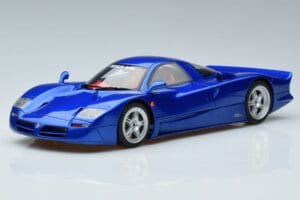
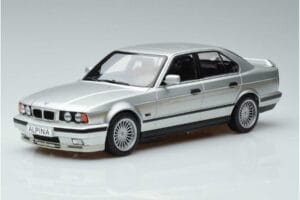
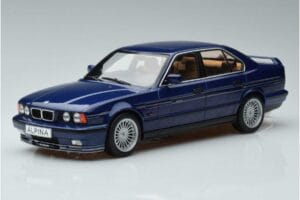
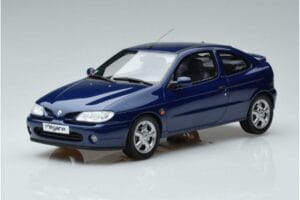
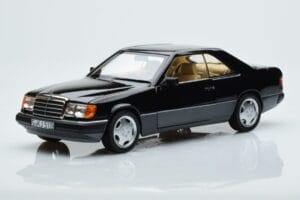
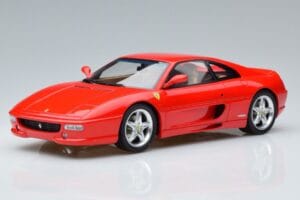
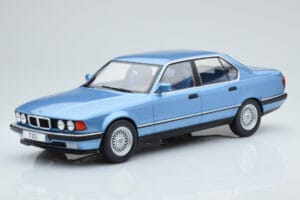
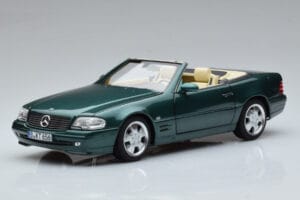
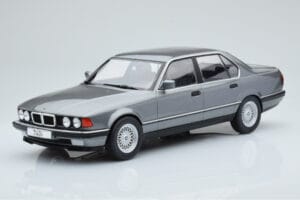
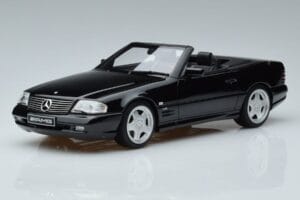
Our 1990s collection includes 29 scale replicas in diecast and resin — road cars, racing legends, and limited editions from the period. Featured marques: BMW, Citroen, Ferrari, Ford, Honda, Lamborghini.
Which car brands define the 1990s?
The 1990s produced cars from BMW, Citroen, Ferrari, Ford, Honda, Lamborghini, Mazda, Mercedes — many now discontinued in model form and sought after by collectors. Browse by brand to find specific models from the period.
What are the most collectible 1990s car models?
The most sought-after 1990s replicas are limited-edition recreations of legendary road and race cars. Discontinued models in low production runs (under 1,000 pieces) appreciate fastest. Original packaging and certificates add value.
Which manufacturers produce 1990s model cars?
1990s car replicas are produced by GT Spirit, MCG, Norev, Otto. Diecast brands focus on accurate road cars; resin specialists recreate rare and limited variants unavailable elsewhere.
What scales are available for 1990s models?
1990s models are available in 1:18. The 1:18 scale captures period-correct details best — chrome trim, dashboard gauges, and engine bays authentic to the era.
Why do collectors love 1990s car models?
The 1990s produced some of the most iconic cars in automotive history — and model manufacturers capture that legacy in precise detail. Limited editions of legendary road and race cars from the period are highly sought after. Period-correct details make these models time capsules of automotive design.
How are model cars shipped?
5-layer packing: original box, bubble wrap, foam inserts, reinforced carton, FRAGILE markings. All shipments tracked and insured. Damage rate under 0.1%.
Do you offer returns?
14-day returns on unused items in original packaging. Defective or damaged in transit? Free replacement — contact us with photos within 48 hours.
1990s model cars sit in a sweet spot for collectors: modern enough to feel familiar, old enough to qualify as true classics, and packed with design details that look incredible in scale. This era bridges the last of the truly analog driver’s cars with the early wave of electronic aids, while motorsport moved from raw 1980s experimentation into highly engineered endurance and touring-car programs. When you browse a 1990s scale model cars category, you’re really exploring several sub-worlds at once—supercar poster cars, JDM tuner royalty, European performance icons, and some of the most recognizable race liveries ever put on a body shell.For American collectors, the 1990s also lands right in peak nostalgia: the cars you saw in magazines, video games, and Saturday morning racing broadcasts are now the centerpiece “dream garage” models. It’s a decade where a collection can be built around a single theme—like Japanese turbo legends or GT1 endurance racers—or around a broader “1990s street scene” that mixes continents and price tiers while still looking cohesive on the shelf.1990s model cars as a collector era: what defines the decade
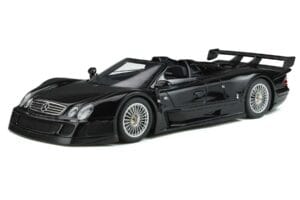
The 1990s aesthetic is instantly recognizable in miniature. You get crisp wedge profiles transitioning into smoother, more aerodynamic surfacing, plus the era’s signature details—pop-up headlamps on icons like the Acura NSX and Mazda RX-7, big rear wings on homologation specials, deep-dish wheels, and body kits that range from subtle factory aero to full tuner aggression. Interior design also changed fast in this period, so scale replicas often highlight the move from simple analog layouts into more complex dashboards, early navigation screens, and multi-function steering wheels by the late 1990s.Motorsport makes the decade even richer. Think of the GT1 era where road cars turned into race cars with barely disguised silhouettes (McLaren F1 GTR, Porsche 911 GT1, Mercedes-Benz CLK GTR). Add the endurance scene at Le Mans, the touring-car arms race (DTM/ITC and BTCC), and rally’s transition from Group A legends like the Lancia Delta Integrale into the early WRC era. If you like storytelling in your display, 1990s diecast models let you build lineups that connect street and track in a way few decades can match.Choosing between diecast and resin for 1990s diecast models
1990s subjects are produced in both diecast and resin, and the “right” choice depends on what you want out of the replica. Diecast models often appeal if you want functional opening features—doors, hoods, trunks—especially on cars where the engine bay or cockpit is part of the car’s identity (think Ferrari V12s, mid-engine exotics, or rally-bred machines with busy interiors). The weight and feel of diecast also suits collectors who handle models while rearranging shelves or building dioramas.Resin models, on the other hand, tend to shine when the priority is exterior accuracy: sharp shut lines, precise body contours, thin-scale aero parts, and paintwork that makes a limited-run supercar look “right” under display lighting. Many resin pieces are sealed, which can be a benefit for long-term display—fewer moving parts, cleaner gaps, and a more sculpture-like presence. For 1990s cars, resin is especially attractive when you’re chasing niche trims, rare homologation variants, or limited-production specials that mainstream diecast lines don’t always tool up.In practical collecting terms, plenty of serious era-focused shelves mix both: a couple of opening-feature diecast “hero pieces” you can inspect up close, supported by sealed resin models that fill in the decade’s deeper cuts and rarities with top-notch body accuracy.Scale strategy for a 1990s scale model cars collection
The 1990s spans everything from compact hot hatches to wide-body supercars, so scale selection matters for how the collection reads as a unified era. In 1:18, the decade’s shapes look dramatic—low noses, big wings, and wheel fitment are obvious from across a room. That makes 1:18 perfect for centerpiece cars like the McLaren F1, Diablo, F50, or a high-impact JDM icon with era-correct wheels and ride height. If you enjoy details like seat patterns, dash textures, and visible brake hardware, 1:18 is also where that stuff really pays off.Collectors who want breadth often lean into 1:43 for the 1990s. It’s the scale where you can build a whole “1990s parking lot” or a complete endurance grid without needing an entire wall of display cases. It’s also a natural scale for racing liveries, because you can group multiple team cars together and still keep the shelf looking clean and intentional rather than overcrowded.And if you’re building dioramas or want the era as a vibe—gas station scenes, tuner meet layouts, or a 1990s street lineup—1:64 offers the most flexibility. Even if your core collection is larger scale, adding a small 1:64 row can be a fun way to represent the decade’s variety without turning your display into a space problem.Theme-building ideas that make 1990s shelves feel authentic
The 1990s rewards collectors who curate by storyline instead of just grabbing random favorites. One strong approach is the “poster car wall”: a focused lineup of the decade’s bedroom-wall legends—supercars and halo cars that define the era’s aspiration. Another is the “tuner timeline,” where you track how Japanese performance evolved through the decade: lightweight, high-revving early cars into more powerful, tech-heavy late-1990s machines. A third is motorsport-driven: a Le Mans and GT1 shelf where the road-going homologation specials sit directly behind their race-livery counterparts, connecting engineering decisions to on-track results.American collectors also love a “modern muscle meets imports” shelf—1990s Corvettes and Mustangs displayed next to JDM icons and European sports cars to reflect what the decade actually looked like on U.S. roads and in enthusiast culture. Even if your store shelf is mostly European exotics, adding one or two domestic anchors helps the era feel real rather than purely fantasy-garage.Small display choices make a big difference for 1990s authenticity: period-style wheels, the right ride height, correct decals for racing or rally variants, and paint colors that scream the era (from bright factory colors to understated metallics). When those details are right, a mixed-manufacturer, mixed-scale 1990s model cars collection still feels cohesive because the decade’s design language ties it together.How collectors evaluate quality on 1990s replicas
Because 1990s cars often have complex aero and distinctive lighting elements, quality is easy to spot. Collectors typically look at headlamp and taillight execution (clarity, correct lens patterning), wheel accuracy (spoke count, lip depth, finish), and stance (does it sit like the real car, or float too high?). On racing models, livery alignment is critical—sponsor placement, color separation, and tampo crispness are what separate a “nice” model from one that looks factory-correct.For street cars, pay attention to trim: window surrounds, door handles, mirrors, and badges. The 1990s is full of subtle details—side markers, repeaters, small vents—that can be over-thick or simplified on cheaper pieces. If you’re deciding between two versions of the same car, these are usually the tells that justify stepping up a tier.Use this category as a browsing hub: filter by scale first if you’re building a consistent display, then narrow by theme (JDM, supercars, endurance, touring cars, rally) and finally by material (diecast vs resin) depending on whether you want opening features or maximum exterior accuracy. However you approach it, 1990s model cars are one of the most satisfying era categories to collect because the decade offers variety without losing a clear, recognizable identity.