{"ajaxurl":"https:\/\/models118.da.smarthost.pl\/wp-admin\/admin-ajax.php","nonce":"1ac71b5fbc","homeUrl":"https:\/\/models118.da.smarthost.pl\/","shopUrl":"https:\/\/models118.da.smarthost.pl\/shop\/","collectionLimit":12,"i18n":{"addedToCart":"Added to cart","addedToWishlist":"Added to wishlist","removedFromWishlist":"Removed from wishlist","error":"Something went wrong","loading":"Loading...","outOfStock":"Out of stock","viewCart":"View cart","addedToCollection":"Added to Collection","reserved":"Reserved!","invalidEmail":"Please enter a valid email address","connectionError":"Connection error. Please try again."},"stats":{"models":552,"brands":31,"makers":11,"collectors":10000}}
Models from the 2000s capture a transformative automotive decade when naturally-aspirated performance peaked before hybrid technology, supercars like Enzo Ferrari and Porsche Carrera GT defined excellence, and design evolved from curves to aggressive angles. Available across scales from multiple manufacturers for era-focused collectors.
2000s Model Cars — Collector Replicas from the Era
9 models from the 2000s — diecast and resin replicas of the era's most collected cars
What 2000s model cars do you offer?
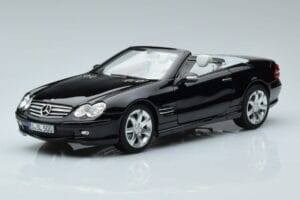
Our 2000s collection includes 9 scale replicas in diecast and resin — road cars, racing legends, and limited editions from the period. Featured marques: BMW, Fiat, Ford, Honda, Mercedes, Peugeot.
Which car brands define the 2000s?
The 2000s produced cars from BMW, Fiat, Ford, Honda, Mercedes, Peugeot, Renault — many now discontinued in model form and sought after by collectors. Browse by brand to find specific models from the period.
What are the most collectible 2000s car models?
The most sought-after 2000s replicas are limited-edition recreations of legendary road and race cars. Discontinued models in low production runs (under 1,000 pieces) appreciate fastest. Original packaging and certificates add value.
Which manufacturers produce 2000s model cars?
2000s car replicas are produced by AUTOart, Norev, Otto. Diecast brands focus on accurate road cars; resin specialists recreate rare and limited variants unavailable elsewhere.
What scales are available for 2000s models?
2000s models are available in 1:18. The 1:18 scale captures period-correct details best — chrome trim, dashboard gauges, and engine bays authentic to the era.
Why do collectors love 2000s car models?
The 2000s produced some of the most iconic cars in automotive history — and model manufacturers capture that legacy in precise detail. Limited editions of legendary road and race cars from the period are highly sought after. Period-correct details make these models time capsules of automotive design.
How are model cars shipped?
5-layer packing: original box, bubble wrap, foam inserts, reinforced carton, FRAGILE markings. All shipments tracked and insured. Damage rate under 0.1%.
Do you offer returns?
14-day returns on unused items in original packaging. Defective or damaged in transit? Free replacement — contact us with photos within 48 hours.
The 2000s model cars category documents a pivotal automotive decade bridging twentieth-century analog engineering and twenty-first-century digital integration. Models from the 2000s represent the final era when naturally-aspirated internal combustion engines achieved performance peaks without hybrid assistance, when manual transmissions remained available in flagship supercars, and when design language transitioned from the flowing curves of 1990s styling toward aggressive angularity that would define modern performance aesthetics. Collecting 2000s replicas serves enthusiasts drawn to recent nostalgia - vehicles from their formative driving years, automotive journalism's benchmark era, or the last decade before electrification fundamentally altered performance car character. This era produced legendary supercars like Ferrari Enzo, Porsche Carrera GT, Mercedes-Benz SLR McLaren, and Bugatti Veyron that set performance benchmarks remaining relevant decades later, while mainstream manufacturers achieved refinement levels making luxury commonplace and performance accessible across wider market segments than previous generations.Defining the 2000s Automotive Landscape
Understanding what makes 2000s vehicles distinctive requires examining technological, design, and market forces that shaped the decade's automotive output. The early 2000s arrived with optimistic economic expansion that funded supercar development projects embodying ultimate performance thinking - Ferrari invested Enzo's Formula 1 technology transfer, Porsche engineered Carrera GT's carbon fiber monocoque and naturally-aspirated V10, Mercedes partnered with McLaren for SLR's supercharged grand touring concept. These halo vehicles represented final expressions of analog performance philosophy before hybrid systems became necessary for emissions compliance and performance enhancement. Mid-decade brought mainstream refinement acceleration, with entry-luxury vehicles from Acura, Infiniti, and Lexus offering features previously exclusive to flagship sedans - navigation systems, adaptive suspensions, premium audio installations - democratizing luxury to broader audiences. Design language evolved dramatically through the decade, with early 2000s vehicles retaining 1990s rounded organic forms before sharp character lines, aggressive front fascias, and LED lighting signatures emerged mid-decade, creating visual distinction that makes 2000s cars instantly recognizable from preceding and following eras. The 2008 financial crisis marked decisive turning point, forcing manufacturers toward efficiency priorities that would mandate turbocharging, downsizing, and electrification strategies defining subsequent decades. Motorsport during the 2000s showcased Michael Schumacher's Ferrari Formula 1 dominance securing five consecutive championships, Audi's Le Mans prototype technology demonstration with diesel and later hybrid powertrains, and GT racing's manufacturer diversity with Corvette, Ferrari, Porsche, and Aston Martin battling across international championships. This combination of ultimate naturally-aspirated performance, mainstream luxury expansion, distinctive design evolution, and motorsport excellence creates rich collecting territory for enthusiasts documenting modern automotive history's transitional decade.Supercar Icons and Performance Milestones
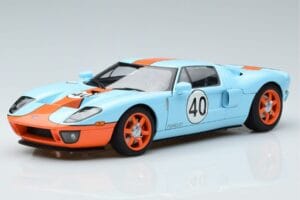
The 2000s produced supercars that remain automotive benchmarks and collecting priorities decades after introduction. Ferrari's Enzo, launched in 2002, translated Formula 1 technology into road-legal form with carbon fiber construction, 660-horsepower naturally-aspirated V12, and aerodynamic efficiency learned from racing - representing the Prancing Horse's ultimate statement before LaFerrari's hybrid successor. Replicas from Hot Wheels through BBR Models span mass-market to premium tiers, with opening-feature 1:18 diecast from Mattel and Bburago serving entry collectors while BBR's resin craftsmanship captures Enzo's complex surfacing and F1-derived details for serious enthusiasts. Porsche's Carrera GT arrived in 2004 as the company's most focused driver's car, pairing carbon fiber monocoque, ceramic composite brakes, and 605-horsepower V10 with six-speed manual transmission and analog driving purity that became increasingly rare. Maisto, AUTOart, and Minichamps produced Carrera GT replicas capturing the car's distinctive rear wing, center-exit exhausts, and minimalist interior philosophy across 1:18 and 1:43 scales. Mercedes-Benz SLR McLaren combined supercharged V8 power with retro-futuristic styling referencing 1950s 300 SLR while incorporating McLaren's Formula 1 expertise, creating controversial grand tourer collecting niche. The Bugatti Veyron's 2005 debut redefined performance benchmarks with 1,001 horsepower, quad-turbo W16 engine, and 253-mph top speed that remained production car record for years, establishing Bugatti's modern renaissance. AUTOart's Signature Series Veyron represents 1:18 diecast achievement with opening features revealing the car's complex engine installation and luxurious interior details, while Minichamps offers sealed 1:43 alternatives for collectors preferring smaller scale. Beyond these headline supercars, the decade delivered Ford GT's retro-modern interpretation of GT40 Le Mans legacy, Lamborghini's Murciélago and Gallardo expansion establishing the brand's modern hierarchy, and McLaren's return to road cars with MP4-12C development beginning late-decade. Each represents collecting opportunity across manufacturer tiers, with premium replicas justifying investments for marquee examples while mass-market options allow comprehensive supercar coverage documenting the era's performance peak before hybrid assistance became mandatory.Motorsport Heritage from the Decade
Racing during the 2000s produced legendary machines and championship battles that drive collecting themes. Formula 1 witnessed Ferrari's unprecedented dominance as Michael Schumacher secured five consecutive championships from 2000-2004, with replicas of his F2001, F2002, and F2004 race cars available from Hot Wheels pocket scale through Minichamps and BBR 1:18 detail. The F2004 particularly represents peak Formula 1 performance before regulation changes constrained aerodynamics and engine specifications, making it collecting cornerstone for Ferrari and Formula 1 enthusiasts. Renault's Fernando Alonso championships in 2005-2006 marked manufacturer diversity return, with R25 and R26 race cars featuring distinctive blue-and-yellow liveries capturing mid-decade competitive balance. Le Mans endurance racing showcased technological innovation as Audi dominated with R8, R10 TDI diesel, and R15 TDI prototypes that demonstrated diesel efficiency and performance credibility, forever changing motorsport's technology assumptions. Bentley's Speed 8 victory in 2003 marked the marque's return to Le Mans after 73 years, creating collecting crossover between luxury brand enthusiasts and endurance racing historians. Corvette Racing's C5-R and C6.R GT1 and GT2 success throughout the decade established American presence in international sports car competition, with distinctive yellow Corvette liveries becoming instantly recognizable. Spark Models specializes in Le Mans prototype and GT racing replicas, offering comprehensive 2000s race car coverage in 1:43 scale that allows collectors to document championship years and legendary entries across the decade. GT racing saw manufacturer participation from Ferrari 360 and F430, Porsche 911 GT3 evolution, Aston Martin DBR9, and Corvette variants battling across FIA GT, ALMS, and Le Mans events. Rally competition featured Subaru Impreza and Mitsubishi Lancer Evolution World Rally Championship dominance early decade before manufacturers withdrew mid-period, with Petter Solberg, Colin McRae, and Sébastien Loeb creating hero moments captured in multiple replica formats. IXO, Vitesse, and Minichamps produced rally car replicas documenting WRC liveries and competition variants that appeal to collectors focusing on motorsport's most demanding discipline. This racing heritage creates natural collecting themes - complete Ferrari F1 championship documentation, Le Mans prototype technology evolution, GT racing manufacturer diversity - that use 2000s as defined timeframe for focused acquisition strategies.Building Era-Focused 2000s Collections
Successful 2000s collecting requires understanding manufacturer coverage, scale selection, and thematic approaches that match era documentation goals. Manufacturer availability spans all quality tiers - Hot Wheels and Bburago provide mass-market entry for comprehensive 2000s vehicle coverage at affordable price points, allowing collectors to document the decade's breadth without premium investment requirements. Maisto occupies accessible territory with 1:18 opening-feature models capturing mainstream 2000s vehicles like BMW 3-Series, Mercedes C-Class, and Audi A4 that defined daily driver landscape alongside supercar headlines. Mid-tier producers Minichamps, Kyosho, and Norev deliver superior quality for significant 2000s models, with particular strength in European manufacturers - Mercedes SL-Class and S-Class luxury progression, Porsche 911 996 and 997 generation coverage, BMW M3 E46 performance variants - that document premium segment evolution. AUTOart represents quality apex for 2000s supercars, with Signature Series treatment given to Enzo Ferrari, Carrera GT, Veyron, and other decade-defining machines justifying premium pricing through exceptional detail accuracy. Resin specialists BBR and Looksmart focus on limited production 2000s Ferraris, Maseratis, and Lamborghinis that received restricted manufacturing numbers, serving collectors pursuing comprehensive Italian exotic documentation. Scale selection depends on collection scope - 1:64 formats from Hot Wheels and similar producers allow exhaustive 2000s coverage spanning hundreds of models across all manufacturer segments, while 1:43 from Minichamps, Spark, and IXO balances detail with space efficiency for focused themes like 2000s motorsport or luxury sedan evolution. The 1:18 format suits collectors prioritizing hero pieces, with opening features revealing 2000s interior technology - early navigation screens, premium audio installations, developing driver assistance systems - that characterized the decade's technological integration. Thematic approaches provide collecting direction beyond arbitrary accumulation - some enthusiasts pursue single-manufacturer 2000s depth documenting how Ferrari, Porsche, or Mercedes evolved through the decade; others organize around segment focus collecting 2000s sports cars, luxury sedans, or SUV expansion that transformed market landscapes; still others curate motorsport themes assembling Formula 1 championship years, Le Mans technological innovation, or GT racing manufacturer participation. Display strategies benefit from chronological organization showing design evolution across the decade - early 2000s rounded forms transitioning through mid-decade character line emergence toward late-decade aggressive angularity - that makes era progression visually coherent. The 2000s represent recent enough history that collector memories remain vivid while distant enough that vehicles achieve classic status, creating emotional connection distinguishing this decade from older historical eras or current production collecting.